
Quick Answer
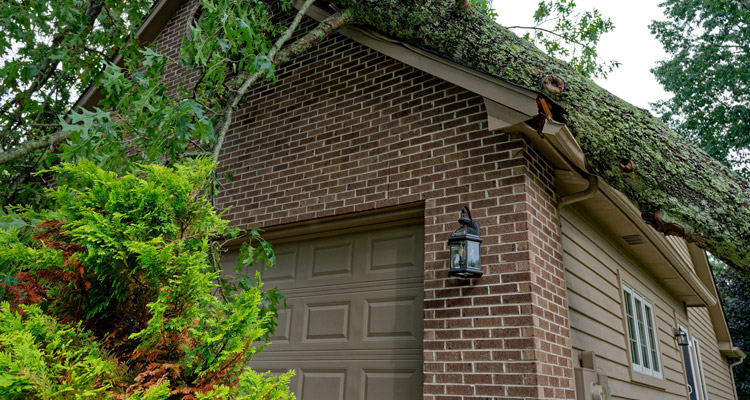
Usually, if a specific storm caused sudden physical damage: wind, hail, a falling tree, or the weight of ice and snow. Wear and tear, deferred maintenance, and flood are generally excluded. Whether filing pays depends on two policy details: the deductible for that storm, and whether your roof is paid at replacement cost or actual cash value.
After a hard nor’easter or a summer thunderstorm, the same question comes up on almost every street in South Jersey: is this an insurance claim? Two houses can take the same storm and get opposite answers, because coverage turns on what caused the damage, which deductible applies, and how the policy pays for an older roof.
The useful question is not whether the roof is damaged. It is whether a covered storm caused the damage, and whether the payment would clear your deductible by enough to justify a claim on your record. Most of that can be worked out before you call your insurer. Emmons is a roofing contractor, not an insurer or a law firm, so treat this as background for that conversation, not insurance or legal advice.
01
What Storm Damage Does Homeowners Insurance Usually Cover?
Most homeowners policies cover sudden physical damage from windstorm, hail, falling trees and other objects, and the weight of ice, snow, or sleet, according to the National Association of Insurance Commissioners (NAIC) 2022 consumer guide. The common Special Form covers every peril it does not specifically exclude. Your own policy’s wording, not a general rule, decides your claim.
The NAIC adds a caveat that matters at the Shore: homeowners policies in most states cover windstorm and hail, but policies in coastal areas often exclude it, in which case wind coverage has to come from a separate policy. If you live near the water, confirm that wind is part of your homeowners policy before you assume it is.
| Type of damage | Typical treatment | What usually decides it |
|---|---|---|
| Shingles lifted, creased, or blown off by wind | Generally covered | Wind on the date of loss and damage consistent with it |
| Hail impacts on shingles, gutters, or siding | Generally covered | Hail at your address and impact marks rather than age-related wear |
| Tree or large limb falling on the house | Generally covered | The NAIC lists trees and other falling objects as a covered peril on most forms |
| Structural damage from the weight of ice, snow, or sleet | Generally covered | A named peril on most forms |
| Rain entering through an opening the storm created | Depends on wording | Whether a covered peril created the opening first |
| Ice dam leaks | Varies | Policy wording, and whether the insurer treats it as a maintenance or ventilation issue |
| Curling, cracking, or granule loss from age | Generally excluded | Wear and tear is not a covered peril |
| Flood or storm surge | Excluded | Requires a separate flood policy |
A storm that meets the National Weather Service definition of severe, hail 1 inch in diameter or larger or winds of 58 mph or greater, is a useful clue. It is a weather definition, not a coverage rule. What an adjuster needs to see is physical damage on your roof or siding that matches the storm.
02
Why Do Insurers Deny Storm Damage Claims?
Most denials come down to cause. A homeowners policy is not a maintenance contract, as the NAIC puts it: it pays for damage from perils such as wind and hail, not for items that simply wear out. Damage an insurer attributes to age, neglect, flooding, or an earlier storm is usually where a claim stops.
From a ladder, storm damage and aging can look alike. Hail can bruise an asphalt shingle without breaking the surface, and old shingles shed granules in patches that look similar to an untrained eye. That is why the quality of the inspection matters more on a storm claim than on almost any other roofing job, and why dated photos taken soon after the storm help.
Delay works against you too. The longer you wait, the harder it is to tie damage to a specific storm date, and small openings keep letting water in while you wait. Our guide to what happens if you delay roof repairs after minor storm damage covers the repair side of that.
Flood is a separate policy
Standard homeowners insurance does not cover flood damage, according to the New Jersey Department of Banking and Insurance (DOBI). Flood coverage comes from the National Flood Insurance Program or a private flood insurer, and DOBI notes that flood insurance is not effective until 30 days after it is sold, so it cannot be bought once a storm is in the forecast.
03
Is Your Storm Damage Worth an Insurance Claim?
Only if the covered repair clearly exceeds your deductible. The NAIC’s 2022 consumer guide says how often you file and the types of claims you file often affect your premium and whether your insurer renews your policy, and it suggests paying for repairs yourself when the cost is not much more than the deductible. Get a written repair estimate first.
Example: What the Insurer Pays on a $15,000 Covered Roof Repair
Example only, not a quote. Assumes a home insured for $500,000, a $15,000 covered repair, and replacement cost coverage with no depreciation withheld. Insurer payment = covered repair minus the deductible, never less than $0. Percentage deductibles are figured on the home’s insured value (Insurance Information Institute), so 1 percent of $500,000 is $5,000.
The same arithmetic works for any policy: find the deductible that applies to the storm that hit you, subtract it from a written repair estimate, and decide whether what is left is worth a claim. The NAIC also notes that most insurers report homeowners claims to shared databases such as the Comprehensive Loss Underwriting Exchange (CLUE), which insurers use to see the claims you have submitted in the past.
The honest read on small claims
If an inspection finds $2,000 of storm damage and your deductible is $2,500, a claim pays nothing, and you have still filed a claim. Before filing anything close to your deductible, ask your agent the question the NAIC suggests: how will a claim affect my premium when I renew? Emmons would rather quote you the repair and tell you that plainly.
04
How Do Hurricane and Windstorm Deductibles Work in New Jersey and Pennsylvania?
Many policies carry a separate, higher deductible for hurricanes or wind, set as a percentage of the home’s insured value instead of a flat dollar amount. The Insurance Information Institute (III) says these percentage deductibles typically run from 1 percent to 5 percent. On a home insured for $500,000, 2 percent is $10,000 and 5 percent is $25,000.
New Jersey’s hurricane deductible rule
New Jersey regulates hurricane deductibles under N.J.A.C. 11:2-42. Insurers may file to use mandatory hurricane deductibles of up to 5 percent and optional ones of up to 10 percent, in ZIP codes listed in the rule or elsewhere with DOBI approval. The required policy language, quoted in DOBI Bulletin 11-16, applies the deductible to a hurricane named by the National Weather Service from which sustained winds of 74 mph or more have been measured in New Jersey by the National Weather Service.
That second condition matters. In 2011, DOBI told insurers that no hurricane deductible should be applied to Hurricane Irene claims because the National Weather Service had not reported New Jersey winds meeting those criteria. When a storm does not meet the test, the hurricane deductible should not be applied.
Pennsylvania and windstorm deductibles
The III notes that some Pennsylvania policies carry hurricane, tropical storm, or named storm deductibles based on a percentage of the insured value, typically 1 to 5 percent. Separately, some policies in both states use a windstorm or wind and hail deductible, which the III describes as applying to any kind of wind damage, not only hurricanes. Look for more than one deductible on your declarations page.
| Deductible | Math | You pay first |
|---|---|---|
| 1 percent | $500,000 x 0.01 | $5,000 |
| 2 percent | $500,000 x 0.02 | $10,000 |
| 5 percent (New Jersey mandatory maximum) | $500,000 x 0.05 | $25,000 |
| 10 percent (New Jersey optional maximum) | $500,000 x 0.10 | $50,000 |
05
How Does Actual Cash Value vs. Replacement Cost Change a Roof Payout?
Replacement cost coverage pays to repair or replace damaged property with materials of like kind and quality. Actual cash value coverage subtracts depreciation for age and wear, so it often does not pay enough to fully repair the damage, as the NAIC notes. On an older roof, which one applies can matter more than the deductible.
With replacement cost coverage, insurers often pay the actual cash value first and release the rest, called recoverable depreciation, after the repair is done and receipts are submitted, according to the North Carolina Department of Insurance’s consumer guide. Ask your adjuster what paperwork releases it and whether a deadline applies.
The roof endorsement to look for
Some policies are written at replacement cost for the house but settle the roof differently. The standard Insurance Services Office endorsement HO 04 93, titled Actual Cash Value Loss Settlement, Windstorm or Hail Losses to Roof Surfacing, settles a covered wind or hail loss to roof surfacing at actual cash value while the rest of the dwelling stays at replacement cost. Check your endorsement list for it, or for any other form that changes how the roof is paid.
| Line | Actual cash value | Replacement cost |
|---|---|---|
| Replacement estimate | $18,000 | $18,000 |
| Depreciation (assumed 15 of 25 years, or 60 percent) | $10,800 not paid | $10,800 held back, then paid after the work is done |
| Deductible | $1,000 | $1,000 |
| Total paid | $6,200 | $17,000 |
The math: $18,000 x 15 / 25 = $10,800 of depreciation, and $18,000 minus $10,800 minus $1,000 = $6,200. The 25-year straight-line schedule is an assumption chosen to make the arithmetic visible. It is not a lifespan estimate, and insurers use different depreciation methods, so your adjuster’s figure will differ.
06
What Should You Do in the First Days After Storm Damage?
Report the loss to your agent or insurer as soon as possible, make temporary repairs to prevent further damage, and save every receipt, the New Jersey Department of Banking and Insurance advises. Photograph damage before anything is removed, and keep damaged materials until the insurer inspects them or tells you they can be thrown away.
- Stay off the roof. A ground-level look is safer. Our guide on how to identify wind damage on your roof after a storm covers what to check from the yard.
- Protect the house. Tarp or board up openings, and keep the receipts for your claim.
- Document everything. Take wide shots that show location, close-ups that show detail, and photos of interior stains or wet insulation.
- Read your declarations page. Note every deductible, whether the policy pays replacement cost or actual cash value, and any roof endorsement.
- Keep a claim file. Write down the claim number, the adjuster’s name, and the date of every conversation, as both DOBI and the NAIC recommend.
- Ask for the estimate. DOBI says the insurer should give you a copy of its damage estimate, and you are not required to use the contractor it recommends.
Policies set their own deadlines. Pennsylvania’s standard fire policy, written into state law, requires immediate written notice of a loss and a sworn proof of loss within 60 days unless the insurer extends that time in writing. Your homeowners policy has its own version of these duties, often in a section titled duties after loss, so read it instead of assuming you have months.
07
What Can a Roofing Contractor Legally Do on Your Claim?
A contractor can inspect, document damage, write a repair estimate, and meet your adjuster to point out what it found. Negotiating the claim for you is different: in both New Jersey and Pennsylvania, anyone paid to act for a policyholder in settling a property insurance claim must be licensed by the state as a public adjuster.
New Jersey’s rules define a public adjuster as anyone who, for money or anything of value, acts or aids on behalf of an insured in negotiating or effecting the settlement of a property claim (N.J.A.C. 11:1-37.2), and N.J.S.A. 17:22B-3(b) says no adjuster shall act on behalf of an insured unless licensed as a public adjuster. Pennsylvania’s Public Adjuster Licensing Law requires a license and bars a public adjuster from contracting with the insured for repairs before the insurer pays or an award is entered. The Pennsylvania Insurance Department adds that an adjuster who is also a contractor can perform only one function at a time, under two separate contracts.
No contractor can legally cover your deductible by building it into the estimate sent to your insurer. New Jersey’s Insurance Fraud Prevention Act counts an estimate of property damage as a statement and makes it a violation to present one knowing it contains false or misleading information. Pennsylvania’s insurance fraud statute, 18 Pa.C.S. Section 4117, specifically covers information that supports an amount claimed in excess of the actual loss. Your deductible is yours to pay.
Red flags after a storm
- An offer to waive, absorb, or rebate your deductible.
- A promise to negotiate or settle your claim for you, from someone without a public adjuster license.
- A guarantee that your claim will be approved, or for a specific amount.
- Pressure to sign today. In New Jersey, the Division of Consumer Affairs says you can cancel a signed home improvement contract for any reason before midnight of the third business day after you receive a copy.
- No registration number. New Jersey requires home improvement contractors to register with the Division of Consumer Affairs, and Pennsylvania requires registration with the Attorney General’s Bureau of Consumer Protection.
08
What Are Your Options If a Storm Claim Is Denied or Underpaid?
Start by getting the decision in writing. New Jersey’s insurance department says that if all or part of a loss is not covered, the company must explain how coverage is excluded under your policy. From there, the usual steps are more documentation, the policy’s appraisal clause, a licensed public adjuster, a regulator complaint, or an attorney.
- More documentation. A detailed inspection report with photos can address damage the first inspection missed or a scope that left out items such as flashing or underlayment.
- Appraisal. The NAIC points to the appraisal clause when you and the insurer disagree about the value of a claim. Pennsylvania’s standard fire policy frames appraisal around disagreements over actual cash value or the amount of loss, so it is generally not the tool when the insurer says the damage is not covered at all.
- A licensed public adjuster. Public adjusters are hired by the policyholder and are typically paid a percentage of the claim payment, DOBI says, though you do not need one to file or resolve a claim. Pennsylvania lets you rescind a public adjuster contract within three calendar days of signing.
- Your state regulator. In New Jersey, call the DOBI Consumer Hotline at 1-800-446-7467. In Pennsylvania, call the Insurance Department at 1-877-881-6388 or use its online Consumer Services portal.
- An attorney. Pennsylvania’s standard fire policy requires a lawsuit on the policy to be filed within 12 months after the loss, and many homeowners policies have their own suit clause. Get legal advice well before any deadline your policy sets.
How Emmons Handles a Storm Damage Inspection
Emmons Roofing & Siding has worked on South Jersey homes since 1988. On a storm call, the job is to establish what happened to the roof and siding, put it in writing with photos you can give your insurer, and tell you plainly when the damage is wear rather than storm, or too small to be worth a claim.
“I had some roof damage and I called Emmons Roofing, and it was the best call I ever made. The roof looks fabulous, they helped with everything related to the insurance, and I would have them absolutely do a roof for anyone I know and love.”
Hester H., West Berlin, NJ, Emmons roofing customer
Find Out Whether You Have a Claim
Emmons will inspect your roof and siding for free, document what it finds in writing with photos, and tell you honestly whether the damage looks storm-related and large enough to be worth a claim. You can also call 1-856-885-6677.
Frequently Asked Questions
Does homeowners insurance cover storm damage to my roof?
Usually, when a specific storm caused sudden physical damage. The NAIC lists windstorm, hail, falling trees and objects, and the weight of ice, snow, or sleet among the perils most homeowners forms cover. Damage from age, wear, deferred maintenance, or flooding is generally excluded, and some coastal policies exclude wind entirely. Your policy’s wording and endorsements decide the outcome, so read them or ask your agent.
Should I file a claim for minor storm damage?
Often not. The NAIC says how often you file and the types of claims you file often affect your premium and renewal, and it suggests paying for repairs yourself when the cost is not much more than your deductible. Get a written repair estimate, subtract the deductible that applies to the storm, and ask your agent how a claim would affect your renewal before you decide.
How long do I have to report storm damage to my insurance company?
Report it as soon as you reasonably can. New Jersey’s insurance department tells homeowners to call their agent or insurer as soon as possible, and Pennsylvania’s standard fire policy requires immediate written notice and a sworn proof of loss within 60 days unless extended in writing. Your homeowners policy sets its own duties and any deadline for suing the insurer, so read it rather than assuming you have months.
What is a hurricane deductible in New Jersey?
It is a separate deductible, set as a percentage of the home’s insured value, that replaces your regular deductible for qualifying hurricanes. Under N.J.A.C. 11:2-42, insurers may file mandatory deductibles of up to 5 percent and optional ones of up to 10 percent. It applies only to a storm named by the National Weather Service with sustained winds of 74 mph or more measured in New Jersey.
What is the difference between actual cash value and replacement cost?
Replacement cost coverage pays to repair or replace damaged property with materials of like kind and quality, often in two payments, with the withheld depreciation released after the work is done. Actual cash value coverage subtracts depreciation for age and wear and stops there. Some policies use an endorsement that pays roof surfacing at actual cash value after wind or hail even when the rest of the house is at replacement cost.
Can a roofing contractor negotiate my insurance claim for me?
Not unless it holds a public adjuster license. New Jersey and Pennsylvania both require anyone paid to act for a policyholder in settling a property claim to be licensed as a public adjuster, and Pennsylvania bars a public adjuster from also contracting for the repairs before the claim is paid. A contractor can still inspect, document damage, write an estimate, and meet your adjuster to point out damage.
Can a contractor pay or waive my deductible?
Treat any such offer as a reason to walk away. Covering a deductible usually means inflating the estimate sent to your insurer. New Jersey’s Insurance Fraud Prevention Act treats a property damage estimate as a statement and prohibits presenting one with false or misleading information, and Pennsylvania’s insurance fraud statute covers claims inflated beyond the actual loss. The deductible is the homeowner’s responsibility.
Sources and notes
- National Association of Insurance Commissioners, A Consumer’s Guide to Home Insurance, 2022. Perils by policy form (windstorm, hail, trees and falling objects, weight of ice, snow, sleet); coastal policies often exclude wind and hail; percentage catastrophe deductibles; replacement cost and actual cash value; a policy is not a maintenance contract; filing a claim, CLUE, appraisal clause, public adjusters.
- National Association of Insurance Commissioners, What’s the Difference Between Actual Cash Value Coverage and Replacement Cost Coverage?, January 2, 2025.
- North Carolina Department of Insurance, Actual Cash Value vs. Replacement Cost Value, accessed October 2026. Recoverable depreciation is typically paid after repairs are completed and receipts submitted.
- Insurance Services Office, HO 04 93 10 00, Actual Cash Value Loss Settlement, Windstorm or Hail Losses to Roof Surfacing, 1999 edition (copy of the form). Wind or hail losses to roof surfacing settled at actual cash value.
- Insurance Information Institute, Background on: Hurricane and windstorm deductibles, accessed October 2026. Percentage deductibles typically 1 to 5 percent of insured value; New Jersey trigger; Pennsylvania named storm deductibles; windstorm deductibles apply to any wind damage.
- N.J.A.C. 11:2-42.9, Hurricane deductibles; percentages and geographic areas, adopted effective February 7, 2011. Mandatory deductibles up to 5 percent, optional up to 10 percent.
- New Jersey Department of Banking and Insurance, Bulletin No. 11-16, Applicability of N.J.A.C. 11:2-42.7 to Hurricane Irene, August 29, 2011. Quotes the Exhibit D trigger: a hurricane named by the National Weather Service with sustained winds of 74 mph or more measured in New Jersey.
- New Jersey Department of Banking and Insurance, Guidance on Filing Insurance Claims for Storm-Related Damage, accessed October 2026. Report promptly, temporary repairs, documentation, estimate copy, coverage explanation, public adjusters, Consumer Hotline 1-800-446-7467.
- New Jersey Department of Banking and Insurance, Protect Your Property Before Extreme Weather Events, accessed October 2026. Homeowners policies exclude flood; flood insurance is not effective until 30 days after it is sold.
- National Weather Service, Birmingham office, What Constitutes a Severe Thunderstorm?, accessed October 2026. Hail 1 inch or larger, or winds of 58 mph or greater.
- New Jersey Department of Banking and Insurance, Order to Show Cause No. E21-16, April 12, 2021. Quotes N.J.S.A. 17:22B-3(b) and the N.J.A.C. 11:1-37.2 definition of a public adjuster.
- Pennsylvania General Assembly, Public Adjuster Licensing Law, Act of December 20, 1983, P.L. 260, No. 72, as amended 2012 (63 P.S. Section 1601 et seq.). Section 2(a) license required; Section 5(a.2) three-day rescission; Section 5(d) no repair contracts before payment or award.
- Pennsylvania Insurance Department, Public Adjuster, accessed October 2026. An adjuster who is also a contractor can perform only one function at a time, with two separate contracts.
- State of New Jersey, New Jersey Insurance Fraud Prevention Act, N.J.S.A. 17:33A-3 and 17:33A-4. “Statement” includes an estimate of property damage.
- Pennsylvania General Assembly, 18 Pa.C.S. Section 4117, Insurance fraud. Subsection (a)(3) covers information supporting an amount claimed in excess of the actual loss.
- New Jersey Division of Consumer Affairs, Hiring Home Improvement Contractors, revised January 13, 2025. Registration requirement; three-business-day cancellation right.
- Pennsylvania General Assembly, Home Improvement Consumer Protection Act, Act 132 of 2008, Section 3. Contractors must register with the Bureau of Consumer Protection.
- Pennsylvania General Assembly, The Insurance Company Law of 1921, Section 506 (standard fire policy), 40 P.S. Section 636. Immediate written notice; proof of loss within 60 days; appraisal; suit within 12 months after inception of the loss.
- Pennsylvania Insurance Department, Complaints, Questions and Help, accessed October 2026. Consumer line 1-877-881-6388 and the Consumer Services Online portal.
This article is general information for homeowners in New Jersey and Pennsylvania. It is not insurance or legal advice. Emmons Roofing & Siding is a home improvement contractor, not an insurer, public adjuster, or law firm, and only your insurer can determine coverage under your policy. For questions about your policy or a claim, contact your agent or insurer, the New Jersey Department of Banking and Insurance, or the Pennsylvania Insurance Department. For deadlines or disputes, consult an attorney. Dollar figures in the examples are illustrations of the arithmetic, not quotes or typical costs. Laws and regulations cited were checked in October 2026 and can change.


